Imagine trying to buy oil or gas when the world’s biggest banks have locked your country out of their payment systems. That is the reality Russia faced after February 2022. Instead of just complaining, Moscow decided to build its own financial highway using digital currency. They didn't just tolerate crypto; they legalized mining and cross-border payments specifically to dodge Western restrictions. This isn't just a tech story-it's a shift in how global money moves.
The Shift from Ban to Business
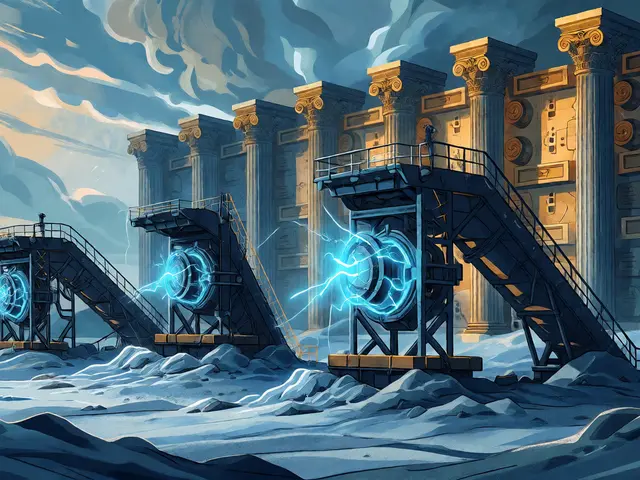
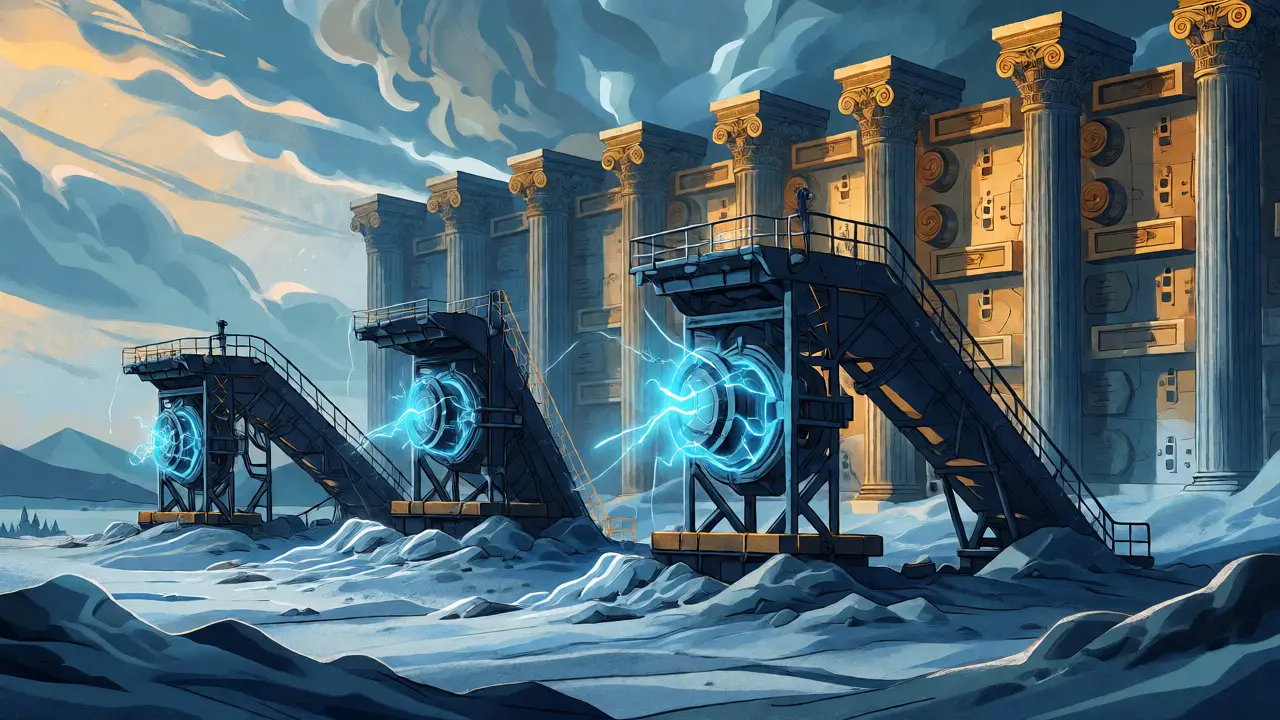
Russia used to be skeptical of cryptocurrency. But as sanctions tightened, that skepticism turned into strategy. The government realized that if traditional banking channels were blocked, they needed an alternative. So, they opened the doors to crypto mining and allowed digital assets to be used for international settlements. This move wasn't about embracing decentralization for the sake of freedom. It was about survival. By legalizing mining, Russia tapped into its massive energy resources to create value that could bypass the US dollar-dominated system. It’s a pragmatic play: use cheap electricity to mine coins, then use those coins to pay for imports that would otherwise be impossible.
The Rise of the A7A5 Stablecoin
You might think Bitcoin is the main player here, but the real workhorse is something less famous: the A7A5 stablecoin. This isn't some obscure token for geeks. It has processed over $51 billion in transactions since its launch through July 2025. Issued by Old Vector, a company based in Kyrgyzstan but backed by Russia's state-owned Promsvyazbank, A7A5 is designed to look like a standard digital dollar but acts like a Russian tool. Why does this matter? Because it operates outside the usual watchful eyes of Western regulators. During its first four months alone, it moved nearly $9.3 billion. That’s serious volume for a coin most people haven't heard of.
| Entity Name | Type | Role in Evasion | Status |
|---|---|---|---|
| A7A5 | Stablecoin | Cross-border settlement vehicle | Active, sanctioned by UK/US |
| Garantex | Crypto Exchange | Liquidity provider for A7A5 | Sanctioned by US (2022) |
| Grinex | Crypto Exchange | Successor to Garantex | Sanctioned by US (Aug 2025) |
| Promsvyazbank | State Bank | Backer of Old Vector/A7A5 | Under heavy sanctions |
How the Shadow Economy Works
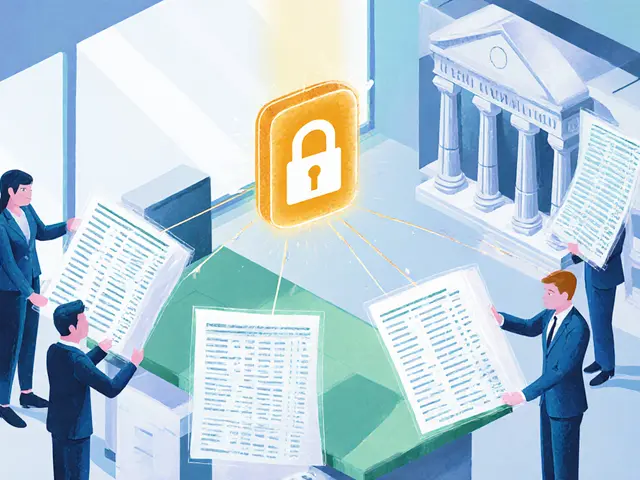
So, how do you actually hide billions in plain sight? You use a network of exchanges that don't ask too many questions. Take Garantex, a crypto exchange with deep ties to Russia. The US hit it with sanctions back in 2022. Did that stop business? No. Former employees simply created Grinex in 2024 to keep things running. It’s a game of whack-a-mole. When one platform gets flagged, another pops up, often operated by the same people, serving the same clients. These platforms form an insular ecosystem. They trade mostly among themselves, creating a closed loop where rubles turn into crypto, crypto turns into goods, and goods flow back into Russia without touching a Western bank account.
Western Countermeasures and Enforcement
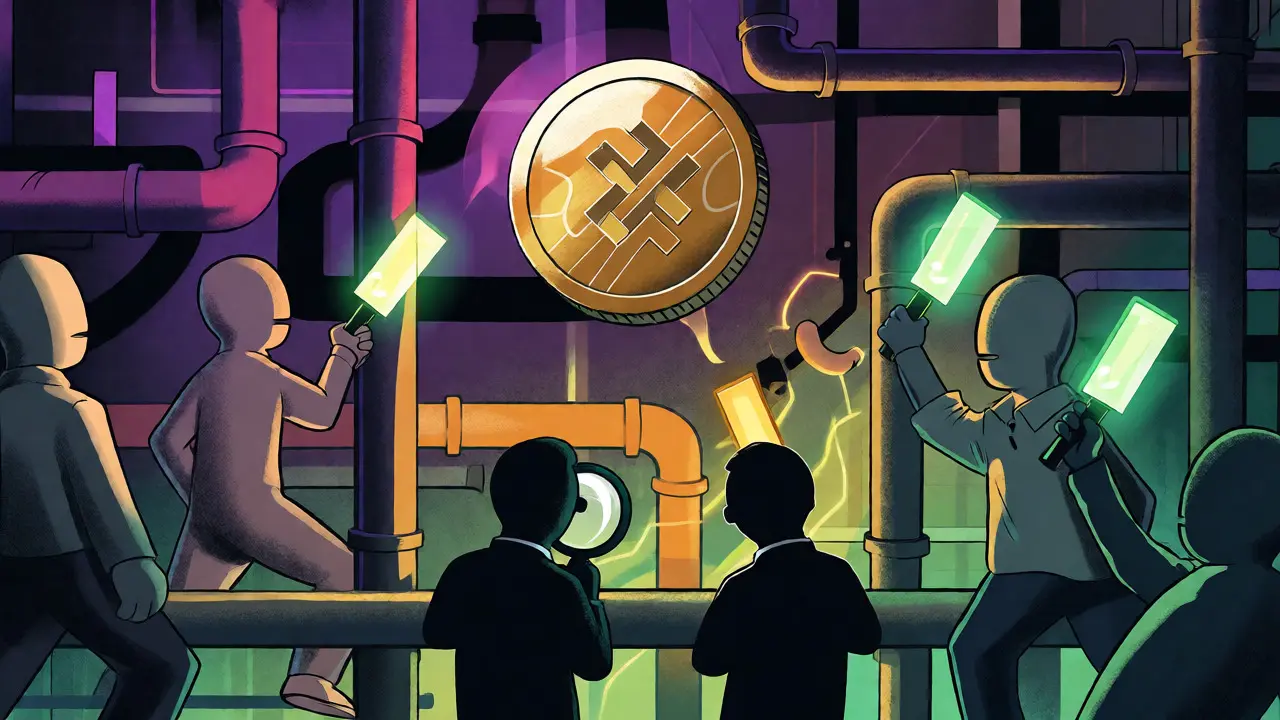
The West hasn't been sitting still. In August 2025, the US Treasury took a significant step. For the first time ever, they designated a virtual currency mining company for sanctions evasion. This was a clear message: we see what you're doing, and we can target the hardware, not just the software. The UK followed suit, sanctioning Grinex, Old Vector, and other entities linked to the A7A5 infrastructure. These actions aren't just symbolic. They freeze assets and cut off access to global markets for the companies involved. But enforcement is tricky. Blockchain technology offers transparency, yes, but it also allows for rapid movement of funds across borders before regulators can react. Authorities are now focusing on the human networks-the oligarchs and bankers who facilitate these trades-rather than just the code itself.
Limitations of Crypto as a Shield
Is this strategy a silver bullet? Not really. Experts point out that while crypto helps, it has limits. Bitcoin and similar assets are too volatile and too small to replace the dollar for large-scale commodity trading. Russia’s pre-war exports were around $400 billion annually. Bitcoin’s entire market cap struggles to cover that kind of daily liquidity without causing massive price swings. Plus, blockchain analytics firms like Chainalysis are getting better at tracing these flows. They’ve mapped out a 'shadow crypto economy' that includes everything from military procurement to weapons trade. While Russia can move money, they can’t completely erase the trail. Every transaction leaves a footprint, and investigators are learning to read them faster.

What This Means for Investors and Traders
If you’re watching global markets, this trend matters. The legalization of mining in Russia signals a long-term commitment to parallel financial systems. We’re seeing the emergence of retail products, like buying A7A5 tokens with standard bank cards, which suggests this isn't just for big institutions anymore. Regular Russians might start using these tools more frequently. For international investors, it highlights the growing fragmentation of the global financial system. You’re no longer dealing with one unified market. You’re dealing with blocs: the Western-led dollar system and a growing alternative centered around gold, commodities, and sanctioned-friendly cryptos. Keeping an eye on regulatory updates from the US Treasury and OFAC is crucial, as new designations can hit specific exchanges overnight.
Frequently Asked Questions
Why did Russia legalize crypto mining?
Russia legalized crypto mining primarily to circumvent Western financial sanctions imposed after the invasion of Ukraine. By allowing mining and cross-border crypto payments, Russia created an alternative financial infrastructure that operates outside traditional Western-controlled banking systems, enabling continued trade and capital movement despite restrictions.
What is the A7A5 stablecoin?
The A7A5 stablecoin is a ruble-backed cryptocurrency issued by Old Vector, a Kyrgyzstan-based company backed by Russia's Promsvyazbank. Launched in early 2025, it has facilitated over $51 billion in transactions, serving as a key tool for cross-border settlements and sanctions evasion due to its lower visibility compared to major dollar-pegged stablecoins.
Which exchanges are central to Russia's crypto evasion network?
Garantex and Grinex are central to this network. Garantex was sanctioned by the US in 2022, leading former employees to establish Grinex in 2024 to continue operations. Both exchanges have been targeted by Western authorities for facilitating high-volume transfers that help Russian entities bypass financial restrictions.
Can blockchain technology effectively hide sanctions evasion?
While blockchain offers some anonymity and speed, it is not perfectly private. Analytics firms like Chainalysis track transaction patterns, linking wallets to known entities. The inherent transparency of public blockchains means that sophisticated investigations can identify evasion networks, making it difficult to hide large-scale activities indefinitely without complex mixing services.
What are the limitations of using crypto for sanctions evasion?
Major limitations include market size and volatility. Cryptocurrencies like Bitcoin lack the liquidity to handle Russia's massive export volumes (approx. $400 billion annually) without significant price impact. Additionally, regulatory crackdowns on exchanges and service providers increase operational risks and costs for businesses attempting to use these rails.